Physical Address
304 North Cardinal St.
Dorchester Center, MA 02124
Physical Address
304 North Cardinal St.
Dorchester Center, MA 02124
From printed concrete homes in Texas to factory-built apartments in California, innovative construction is delivering affordable units faster and cheaper than ever.
The United States faces a shortage of millions of affordable housing units, a gap that traditional stick-frame construction — slow, labor-intensive, and increasingly expensive — has struggled to close. But a new generation of building technologies is changing the math. Across the country, 3D-printed homes and modular construction are delivering finished units in days rather than months, at costs that make affordability targets achievable without deep subsidy stacking. The evidence is real, the projects are scaling, and the policy environment is beginning to catch up.
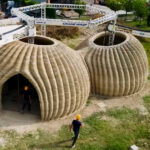
Just a few years ago, 3D-printed housing was largely a curiosity — a single demonstration structure at a trade show. Today it is a functioning delivery mechanism for affordable homes. ICON, an Austin-based construction technology company, has partnered with nonprofit developer Mobile Loaves & Fishes to build an entire community of 3D-printed homes in Austin, Texas, called Community First! Village. The project provides permanent supportive housing for people experiencing chronic homelessness, with ICON’s proprietary concrete-printing technology — its Vulcan system — producing the structural walls of each home in a matter of hours.
The construction approach matters for affordability in concrete ways. Because the printing process requires far less skilled labor than conventional framing, and because material waste is dramatically reduced, per-unit construction costs can be meaningfully lower than comparable site-built homes. ICON has also partnered with Lennar, one of the country’s largest homebuilders, to develop a 100-home 3D-printed neighborhood in Georgetown, Texas — signaling that the technology is moving from pilot to production scale.
The implications for affordable housing extend beyond Texas. Habitat for Humanity has explored 3D-printing partnerships in several markets, and researchers at institutions including the University of Maine have developed large-format printing systems capable of producing energy-efficient home structures. The National Association of Home Builders has tracked these developments closely, noting that labor shortages in the construction trades — one of the primary drivers of rising build costs — are precisely the pressure point that automated construction addresses most directly.
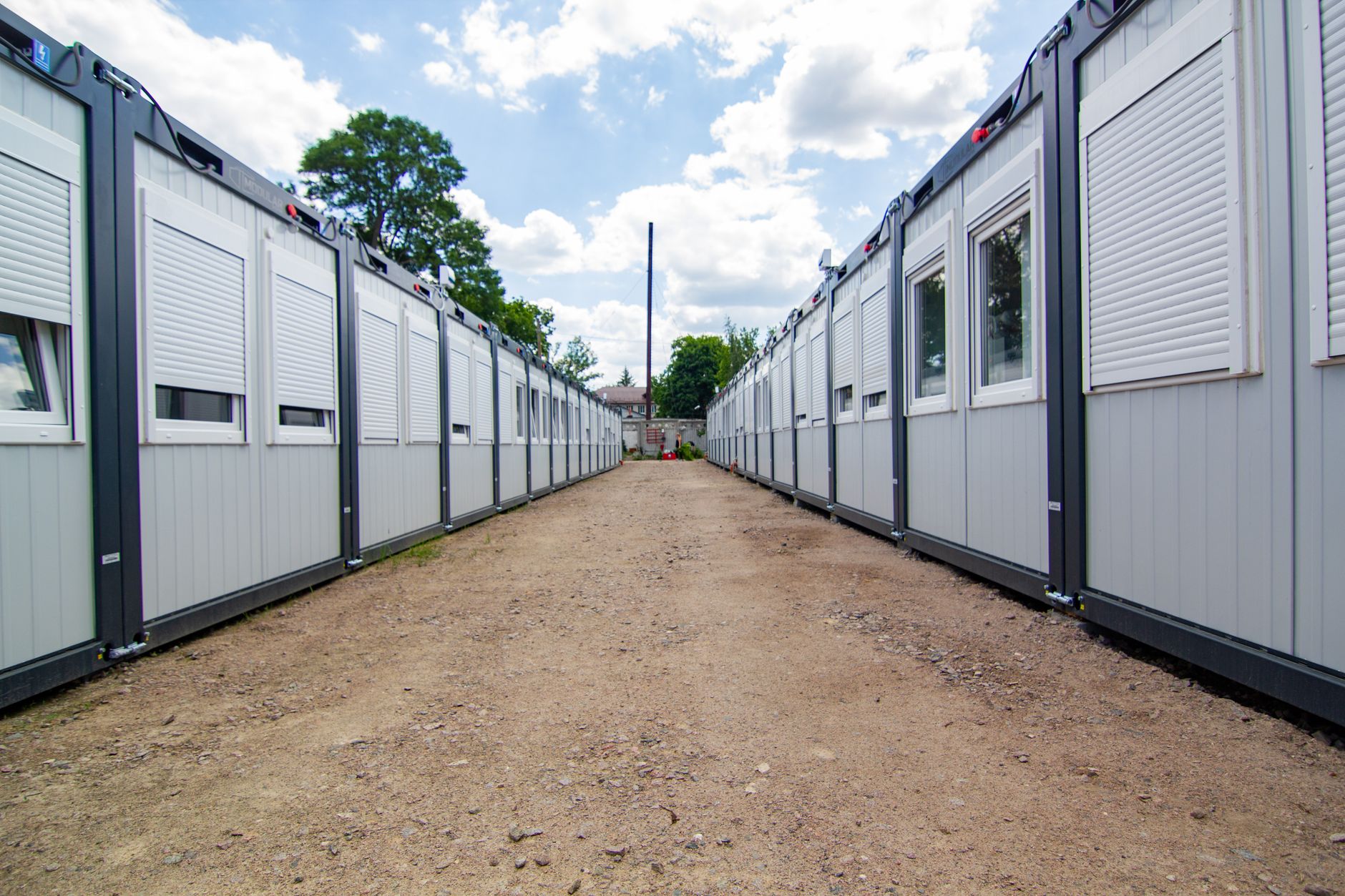
While 3D printing captures headlines, modular construction has been quietly proving itself at significant scale for longer. In modular builds, individual units or sections of a building are assembled in a factory under controlled conditions, then transported to a site and stacked or connected. The approach compresses construction timelines dramatically — the Urban Institute has documented how factory-built methods can reduce construction time by roughly 20 to 50 percent compared to conventional builds — and it moves much of the labor indoors, away from weather delays and site inefficiencies.
California, facing perhaps the most acute affordable housing crisis of any state, has become a proving ground for modular approaches at meaningful scale. The state’s Homekey program, which rapidly converts existing structures into permanent supportive housing, has increasingly relied on modular and prefabricated components to hit aggressive timelines. Meanwhile, companies like Factory OS, based in the San Francisco Bay Area, operate large-scale manufacturing facilities specifically producing modular units for affordable and workforce housing projects. Factory OS has reported being able to deliver completed modular apartment units significantly faster and at lower cost per square foot than comparable site-built construction in the Bay Area market.
New York City has also embraced modular for affordable development. The city’s Department of Housing Preservation and Development has supported modular projects in the Bronx and Brooklyn that deliver income-restricted units to families on waiting lists. Internationally, places like the United Kingdom have seen large housing associations commission entire modular apartment blocks, with the National Housing Federation there advocating for factory-built methods as a core part of the country’s affordable housing delivery strategy.
A peer-reviewed analysis published in the journal Construction Management and Economics found that modular construction projects consistently demonstrate lower on-site labor hours and reduced material waste relative to traditional methods — twin advantages that translate directly into lower total development cost, which is the single biggest constraint on affordable unit production.
The honest picture is that both 3D printing and modular construction still face real barriers. Zoning codes in many jurisdictions were written with stick-frame construction in mind, and some localities have been slow to update their approval processes for factory-built units. Financing is another friction point: construction lenders are often more comfortable underwriting conventional methods, and appraisers have less comparable-sale data for modular buildings, which can create challenges in valuing finished projects.
But momentum is building on both fronts. HUD has actively promoted manufactured and modular housing through its MH Advantage program and through the HUD Code, which sets federal construction and safety standards for factory-built homes in a way that enables broader financing access. Several states, including Minnesota and Virginia, have worked to streamline their permitting and inspection processes for modular units, reducing the administrative drag that previously slowed adoption.
The National Alliance to End Homelessness and other advocacy organizations have increasingly pointed to construction cost reduction as a necessary condition — not just a nice-to-have — for producing affordable and supportive housing at the volume the crisis demands. Innovative construction is one of the clearest levers available to pull costs down without sacrificing quality or durability.
For cities and states looking to replicate what is working, the path is reasonably clear: update zoning and building codes to explicitly accommodate factory-built and printed construction, work with lenders and insurers to develop standard underwriting frameworks for these methods, and direct public land and subsidy dollars toward projects that use cost-reducing technologies. The homes are being built. The question now is how fast communities choose to learn from what is already working and build the pipeline that the housing shortage demands.